Address
304 North Cardinal St.
Dorchester Center, MA 02124
Work Hours
Monday to Friday: 7AM - 7PM
Weekend: 10AM - 5PM
Address
304 North Cardinal St.
Dorchester Center, MA 02124
Work Hours
Monday to Friday: 7AM - 7PM
Weekend: 10AM - 5PM
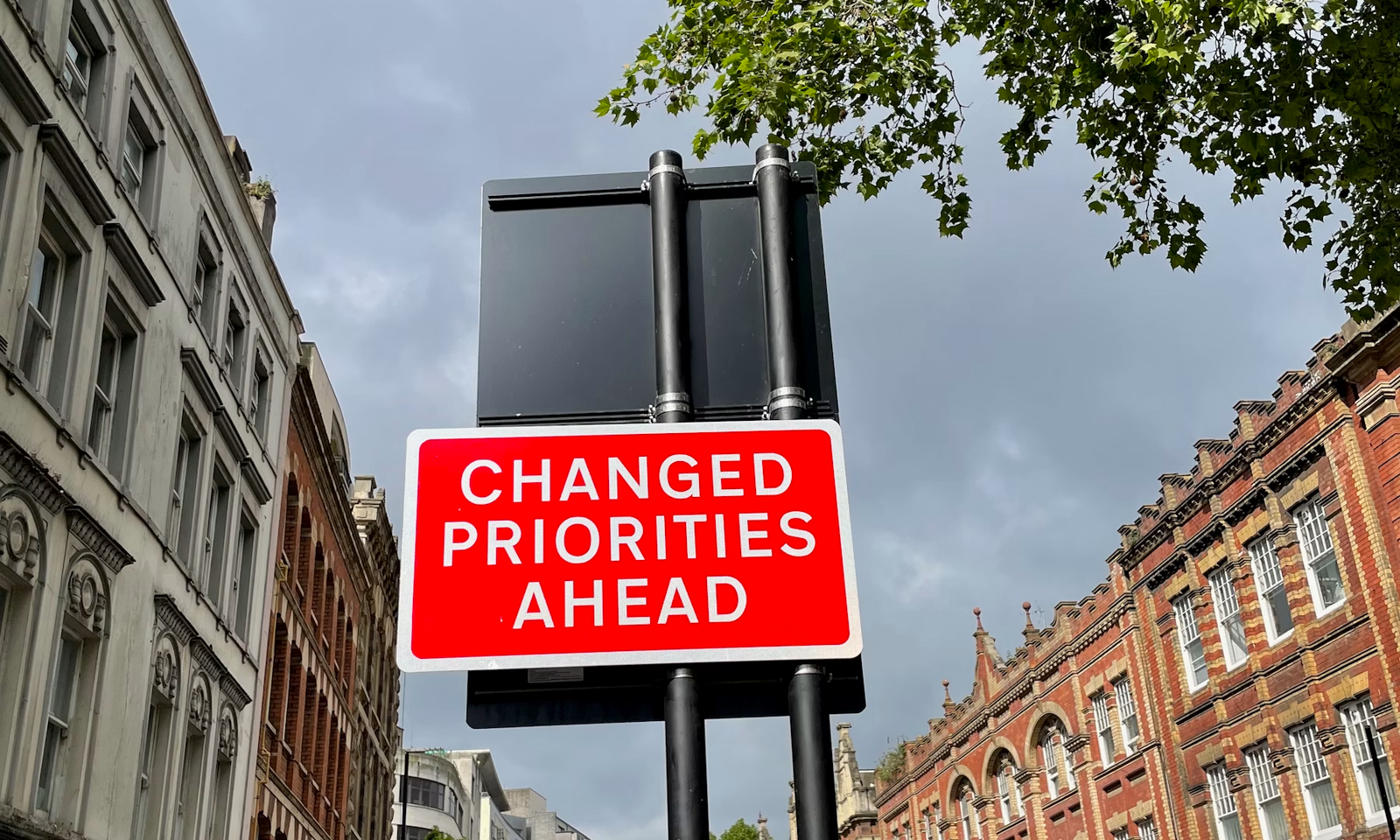
Most change initiatives fail not because of poor intent, but because of poor system design. Here are seven specific mistakes that break change under operational pressure... and what to do instead.
Why is it that most change initiatives fail to deliver their promised value? You’ve seen the statistics: roughly 70% of change programs fall short of their goals. But the more useful question is this: what, technically, causes the effort to break down in real work?
In practice, failure usually has less to do with poor intent and more to do with poor system design. People are asked to behave differently while targets, meetings, escalation routes, measures, and incentives all stay the same. That is a predictable failure mode. If you treat an organisation like a machine where parts can simply be swapped out, you create the “rebound effect,” where the system snaps back to its original state as soon as attention moves elsewhere.
Good change work is not about persuading people harder. It is about changing the conditions of work so the better method is easier to perform, easier to see, and easier to sustain. Here are some common mistakes, and more importantly, what to do instead when you want change to hold up under the operational pressure
The biggest mistake is viewing change as a separate workstream that exists outside daily operations. You appoint a project manager, create a separate budget, and hold “change meetings.” By doing this, you’ve already signalled that improvement is an “extra” activity people do after the real work is done. That sounds harmless, but it isn’t. Anything treated as extra work will lose to today’s operational pressure. The inbox wins. The late order wins. The incident wins. The month-end close wins.
A better way forward: Build improvement into the operating rhythm, not around it.
If the change isn’t happening at the Gemba, it probably isn’t happening at all. If you want a practical test, ask yourself: where, exactly, would I stand to watch this new way of working happen? If you cannot answer in ten seconds, the change is still conceptual.
Do you think people believe the slide deck because it says “top priority”? They don’t. They watch what leaders attend, what they ask about, what they ignore, and what they tolerate. Passive sponsorship kills momentum because it creates a split system. One system is the official story. The other is the lived story. If a leader says, “This matters,” but still asks for the old report, overrides the new process, or skips the review cadence, the organisation learns very quickly which system is real.
A better way forward: Make sponsorship observable in leader standard work.
Leadership is not support by announcement. It is support through repeated behaviour under pressure, and making it safe for people to take action and learn from them. A useful check can be if I followed the leader for two weeks without hearing a speech, would I still know what truly matters in this organisation?
We often see organisations jump straight into the technicalities of Lean, Six Sigma, or software implementation without explaining the real problem to be solved. They introduce templates, tollgates, and training decks before anyone has agreed on what is actually failing in the work. That creates a predictable reaction… people experience the method as bureaucracy rather than help. So I also want to correct some common misunderstandings:
Those definitions matter because they change how you lead. If you teach Lean as a hunt for waste, people start spotting symptoms, and I liken this to giving everyone an inflatable hammer – you will just end up whacking ‘stuff’. If you enable Lean as capability-building, people learn how to see causes, test countermeasures, and improve judgement at the point of work.
A better way forward: Start with the operational pain in concrete terms, and remember that you have to learn by doing.
Have you ever been told to complete a form or document with no clue who reads it or what decision it actually changes? That is how improvement dies. People support what they can connect to real work and in a way that appeals to their intrinsic motivation.
How often have you seen a strategy developed in a meeting room that falls apart the moment it hits the shop floor or the call centre? Usually for one reason: the people designing the change are too far removed from the Gemba to understand the actual constraints. I find the cognitive puzzle is “Why do we assume the person furthest from the task has the clearest view of it?”
When you exclude frontline staff from design, you lose 3 things at once:
A better way forward: Co-design at the point of work.
Separate work as imagined (how leaders think the process runs) and how work is done (how the process actually runs under real conditions) – improve can start when those 2 are compared honestly and sincerely without pointing fingers at one another.
Many organisations try to change everything at once. Multiple workstreams. Multiple tools. Multiple messages. The result is not acceleration. It is interference. And when too much changes at the same time, you create several technical problems such as:
A better way forward: Reduce the number of moving parts.
Transformation is not a sprint. But it is also not wandering. It needs pace, sequence, and the discipline to say no to “just one more initiative.” Because if everything is a priority, nothing really is, and what can we learn in that environment?
This may be an apt point to bring up… who has heard of Kaizen?… Now have you heard of Kaikaku?
You send people to a three-day workshop. They come back energised, then within two weeks they revert to old habits. Why? Because training is an event, but learning and culture is a change in capability demonstrated over time. If the environment and systems they return to has not changed, the course competes with reality and reality usually wins. Training without application, feedback, and repetition becomes trivia. Remember: A bad system beats a good person every time.
A better way forward: Tie every training input to a live problem and a coached practice cycle, an recognise the learning never stops.
Skill development must be followed immediately by practical application at the Gemba. Just because someone has a certificate, does not necessarily mean they are given the ability to execute change at the process.
The technical “go-live” date is not the end. It is the start of the phase where the organisation decides, quietly, whether the new method is worth the effort, and the system is stressed to see where the new weak links in the chain are.
Once the launch energy fades, people test the system. They ask, often without saying it out loud:
If you stop measuring, coaching, and reinforcing at that point, the old system comes back through habit and necessity. Not because people don’t mean well, but because that is what humans do.
A better way forward: Build a reinforcement loop that checks whether the method is alive in practice, and that the new problems arising are addressed with the people doing the value-adding work. Include:
Track adoption separately from outcomes:
System thinking means we fix the system to protect the people. If a process fails, the first question is not “Who messed up?”, It is “What conditions made this error more likely, harder to detect, or harder to recover from?”
Change becomes less painful when you stop treating it as a motivation problem and start treating it as a work design problem. If you want to begin today, keep it simple: •
Don’t just study these concepts… start practicing them. Look at your current change effort. Which of these seven mistakes is most visible right now? Start there. Not with a slogan. Not with a launch deck. With one real problem, observed carefully, worked on respectfully, and followed through properly.
It is an immutable law in business that words are words, explanations are explanations, promises are promises, but only performance is reality.
Harold Geneen

